Hypoallergenic Cats: 8 Low-Allergen Breeds, Allergy Tips & Complete Care Guide
Do you love cats but start sneezing, itching, or wheezing the moment you’re near one? You’re not alone. For many people, the dream of cuddling a furry companion feels impossible because of allergies.
But here’s some good news: while no cat is 100% hypoallergenic, certain breeds are known to produce fewer allergens and may be more tolerable for sensitive individuals.
Most cat allergies are triggered by a protein called Fel d 1, which is found in a cat’s saliva, skin (dander), and sebaceous glands. When cats groom themselves, this protein spreads to their fur and eventually into the air and around your home. The level of Fel d 1 varies by breed — and even by individual cat — making some cats easier to live with than others.
In this complete guide, you’ll discover 8 low-allergen cat breeds, practical allergy-management tips, and essential care advice to help you create a comfortable home for both you and your feline friend. If you’ve been waiting for the right way to welcome a cat into your life, this guide will help you make an informed and confident choice.
What Does “Hypoallergenic” Really Mean in Cats?
When people hear the term hypoallergenic cats, they often assume it means “allergy-free.” In reality, that’s not what the word means. “Hypoallergenic” simply means less likely to cause an allergic reaction — not guaranteed to prevent one.
No cat is completely non-allergenic. All cats produce allergens, but the amount and type can vary depending on the breed, genetics, and even the individual cat.
The Real Cause of Cat Allergies
Many people believe they’re allergic to cat fur. However, the main trigger isn’t the fur itself — it’s a protein called Fel d 1. This protein is found in:
- Saliva
- Skin cells (dander)
- Sebaceous (oil) glands
When a cat grooms itself, saliva containing Fel d 1 spreads onto its fur. As the saliva dries, tiny allergen particles become airborne and settle on furniture, bedding, and clothing. These microscopic particles are lightweight and sticky, which is why they’re so hard to eliminate completely.
Why Some Cats Trigger Fewer Allergies
Certain breeds are labeled “hypoallergenic” because they:
- Produce lower levels of Fel d 1
- Shed less fur (which reduces allergen spread)
- Have hair types that trap dander more effectively
It’s also worth noting that male cats (especially unneutered males) typically produce more Fel d 1 than females. Hormones play a role in allergen production, which is why neutered cats may cause fewer reactions.
That said, responses vary from person to person. One individual might tolerate a specific breed very well, while another still experiences symptoms. Sensitivity levels matter just as much as the breed itself.
Hypoallergenic Doesn’t Mean Maintenance-Free
Even low-allergen cats still require proper care to minimize reactions. Regular grooming, frequent cleaning, air purification, and limiting allergen buildup in your home are essential steps. Managing allergies is about reducing exposure — not eliminating it entirely.
In short, “hypoallergenic” in cats means lower risk, not zero risk. Understanding this distinction helps set realistic expectations and allows you to choose a breed — and a care routine — that fits your lifestyle and allergy sensitivity.
What Causes Cat Allergies?
Cat allergies are not caused by fur itself. The real problem is tiny proteins that your immune system reacts to. The main allergen is a protein called Fel d 1, and it is found in three main places:
1. Dander (dead skin cells): Cats constantly shed microscopic flakes of skin. These flakes carry allergen proteins and easily float in the air. Because they are so small and light, they spread quickly around your home and stick to furniture, clothes, and bedding.
2. Saliva: When cats groom themselves, saliva spreads over their fur. As it dries, the allergen becomes airborne and can trigger sneezing, itchy eyes, or breathing problems.
3. Urine: Cat urine also contains allergen proteins. When litter boxes are disturbed or not cleaned regularly, allergens can spread into the air.
Together, these allergens build up indoors and cause allergy symptoms.
The Role of Fel d 1 Protein
Fel d 1 is the primary protein responsible for most cat allergies. It is produced in a cat’s salivary and sebaceous (oil) glands and is also present in skin cells. When a cat grooms itself, saliva containing Fel d 1 spreads onto the fur.
As it dries, the protein becomes airborne and attaches to surfaces like furniture, carpets, and clothing. Because the particles are extremely small and sticky, they remain in the environment for a long time.
Some cat breeds naturally produce lower levels of Fel d 1. Genetics play a major role, which is why certain breeds are often described as “hypoallergenic.”
Additionally, female and neutered cats typically produce less Fel d 1 than unneutered males. However, production levels can vary from one individual cat to another, so reactions may still differ between people.
Are Any Cats 100% Allergy-Free?
No. There are no cats that are completely allergy-free.
Every cat produces allergen proteins, including Fel d 1, even breeds labeled as “hypoallergenic.” The difference is that some cats produce lower levels, which may reduce symptoms for certain people.
However, individual reactions vary. One person may tolerate a specific breed well, while another may still experience sneezing, itchy eyes, or breathing issues.
Being realistic is important. Instead of searching for a “perfect” allergy-proof cat, focus on choosing a lower-allergen breed and managing your environment properly. With the right approach, many allergy sufferers can successfully live with cats.
8 Best Hypoallergenic Cat Breeds
If you love cats but struggle with allergies, choosing the right breed can make a significant difference. Remember, no cat is completely allergy-free — but some breeds naturally produce lower levels of the Fel d 1 protein or shed less, which helps reduce allergen spread.
Below are 8 of the best low-allergen cat breeds, along with their temperament, grooming needs, and why they may be suitable for allergy sufferers.
1. Siberian
The Siberian may surprise many allergy sufferers. Despite its thick, luxurious triple coat, studies and breeder reports suggest that many Siberians produce lower levels of Fel d 1 compared to other breeds.
Temperament: Affectionate, playful, intelligent, and social.
Grooming: Weekly brushing; more frequent during shedding season.
Why they’re considered hypoallergenic: Lower average Fel d 1 production in many individuals.
Siberians are ideal for families who want a friendly, dog-like cat that enjoys interaction.
2. Balinese
The Balinese is often called the “long-haired Siamese.” Despite its silky coat, it is known for producing lower levels of Fel d 1.
Temperament: Vocal, loyal, highly intelligent.
Grooming: Light brushing 1–2 times per week.
Allergy advantage: Lower allergen production relative to many breeds.
Balinese cats bond closely with their owners and enjoy being involved in daily activities.
3. Russian Blue
The elegant Russian Blue is one of the most recommended breeds for allergy sufferers.
Temperament: Gentle, reserved with strangers, loyal.
Grooming: Minimal; short dense coat requires little maintenance.
Why low-allergen: Known to produce lower Fel d 1 levels and has a dense coat that may trap dander.
They are perfect for quieter households and apartment living.
4. Bengal
The energetic Bengal has a short, fine coat that sheds less than many other breeds.
Temperament: Active, curious, athletic.
Grooming: Minimal brushing needed.
Allergy benefit: Less shedding may reduce airborne allergens.
Bengals need stimulation and space, making them best for active owners.
5. Sphynx
The hairless Sphynx is often the first breed people think of when discussing allergies.
Temperament: Affectionate, energetic, attention-loving.
Grooming: Regular bathing to remove oil buildup.
Important note: They still produce Fel d 1 — they just don’t have fur to spread it widely.
Sphynx cats require dedicated care but are extremely loving companions.
6. Devon Rex
The playful Devon Rex has a short, curly coat that sheds very little.
Temperament: Mischievous, affectionate, social.
Grooming: Gentle wiping; minimal brushing.
Allergy benefit: Reduced shedding means less allergen spread.
They love climbing and being close to their humans.
7. Cornish Rex
The slim Cornish Rex has only a soft undercoat, unlike most cats.
Temperament: Playful, energetic, affectionate.
Grooming: Very low; occasional wipe-down.
Why suitable: Minimal fur reduces allergen distribution.
Cornish Rex cats are ideal for interactive households.
8. Oriental Shorthair
The sleek Oriental Shorthair is closely related to the Siamese.
Temperament: Vocal, intelligent, highly social.
Grooming: Minimal shedding.
Allergy edge: Short coat and moderate Fel d 1 production.
They thrive on companionship and do not enjoy being left alone.
Best Hypoallergenic Cats for Apartments
Living in a smaller space doesn’t mean you have to give up your dream of having a cat — even if you’re sensitive to allergens.
For apartment living, the right breed should be low-shedding (to reduce allergen spread), calmer in temperament, and adaptable to indoor life. Apartments benefit from cats that enjoy close human interaction without needing large open spaces or constant outdoor access.
Here are some top low-allergen choices that thrive in apartment environments and fit a range of lifestyles.
Low-Shedding and Quiet Breeds
Some breeds are especially suited for apartment life because they shed less and have calm, gentle personalities.
Russian Blue: This graceful cat is known for its low shedding and softer personality. Russian Blues are quiet, loyal, and enjoy peaceful routines, making them perfect for apartments where noise and disruption are limited.
Burmese: Friendly without being overly active, Burmese cats form strong bonds with their humans. Their short coat sheds minimally, reducing allergen buildup, and they enjoy indoor play and snuggles rather than constant high-energy activity.
Balinese: Despite their silky longer fur, Balinese cats tend to produce lower allergen levels and adapt well to smaller living spaces. They’re vocal but gentle, loving interaction without excessive demands on space.
Oriental Shorthair (optional pick): Sleek and low-shedding, Orientals are social yet adaptable. They thrive in cozy environments with human company and don’t require the room that larger, high-energy breeds do.
These breeds balance personality with practicality — calm, companion-focused, and easygoing in confined spaces.
Cats Suitable for Small Spaces
Some cats are well-suited for apartment life because of their moderate energy levels and strong indoor compatibility.
Siberian: Though fluffy, Siberians are surprisingly adaptable indoors. They enjoy playtime but also appreciate relaxed lap time, which suits apartment routines.
Devon Rex: Small, spirited, and inquisitive, Devon Rex cats don’t need a large territory. They channel their energy into interactive play and love being close to people.
LaPerm: With their gentle, adaptable nature and moderate energy, LaPerm cats do well in cozy homes. They enjoy play sessions and quiet cuddle breaks without needing wide-open space.
Russian Blue (again): Calm and low-energy, they find contentment in a good sunbeam and your company — great for apartment life.
These breeds pair indoor friendliness with manageable activity levels, making them ideal roommates for apartment dwellers who want both comfort and companionship.
Hypoallergenic Cats That Don’t Shed Much
If you’re sensitive to cat allergies, shedding is often your biggest concern. Loose fur can carry dander and spread allergens around your home. While no cat is completely allergy-free, breeds that shed less can significantly reduce airborne allergens and make daily life more comfortable.
Low-shedding cats typically fall into two categories: short-haired breeds with minimal undercoat and hairless breeds that lack traditional fur altogether. These cats release less loose hair into the environment, which may help control allergen buildup on furniture, carpets, and clothing. However, it’s important to remember that shedding and allergen production are not the same thing. Even cats that barely shed still produce the Fel d 1 protein in their saliva and skin.
Choosing a low-shedding breed can be a helpful step, but proper grooming and home care play an equally important role in managing allergies effectively.
Short-Haired vs Hairless Breeds
Short-haired cats have sleek coats that lie close to the body and usually lack a heavy undercoat. Because they shed less fur, fewer allergen-carrying hairs circulate in your home. Breeds like the Russian Blue or Burmese are examples of short-haired cats that may be easier for allergy sufferers to tolerate.
Hairless breeds, such as the Sphynx, do not shed fur because they don’t have it. This reduces the spread of loose hair on surfaces. However, hairless does not mean allergen-free. These cats still produce Fel d 1 in their saliva and skin oils. In fact, without fur to absorb oils, allergens may accumulate directly on the skin.
In short, less shedding can help reduce allergen spread — but it does not eliminate allergy triggers completely.
Grooming Differences
Proper cat Grooming is essential for allergy control, regardless of coat type. For short-haired breeds, brushing two to three times per week helps remove loose fur and dander before it spreads around your home. Using a fine-toothed brush or grooming glove can make the process gentle and effective.
Hairless breeds require a different approach to cat Grooming. Since they lack fur to absorb skin oils, they need regular bathing — usually once a week — to remove oil buildup and allergens from the skin. Gentle, pet-safe shampoo is recommended.
To reduce allergens further:
- Wash hands after handling your cat.
- Clean bedding frequently.
- Use HEPA air purifiers.
- Vacuum with a sealed filtration system.
Consistent grooming and cleaning routines make a noticeable difference in managing allergy symptoms.
How to Reduce Cat Allergens at Home
Managing cat allergies isn’t just about choosing the right breed — your home environment plays a major role.
Since allergens like Fel d 1 protein spread through saliva, dander, and microscopic skin flakes, reducing exposure inside your living space is key. The goal isn’t to eliminate allergens completely (which is nearly impossible), but to lower their concentration enough to minimize symptoms.
A combination of proper nutrition, air filtration, and consistent cleaning can significantly reduce allergen buildup. Small daily habits — like washing hands after petting your cat or keeping certain rooms pet-free — also make a noticeable difference.
With the right system in place, many allergy sufferers successfully share their homes with cats without constant discomfort.
Below are the most effective strategies to control allergens in a practical, sustainable way.
The Role of cat diet & nutrition in Allergen Control
Your cat’s overall health directly affects allergen production. A balanced cat diet & nutrition plan supports healthy skin, a strong immune system, and better coat quality — all of which influence dander levels. Poor nutrition can lead to dry, flaky skin, which increases shedding and airborne allergens.
High-quality protein, essential fatty acids (like Omega-3 and Omega-6), vitamins, and minerals help maintain skin moisture and reduce excessive flaking. When the skin barrier is healthy, less dander is released into the environment.
Some specialized foods are designed to reduce active allergens in saliva. When combined with consistent care, the right cat diet & nutrition routine may help lower the amount of allergen spread during grooming.
Always consult a veterinarian before changing your cat’s diet. Nutritional improvements won’t eliminate allergies completely, but they can be an important part of a long-term allergen control strategy.
Air Purifiers & HEPA Filters
Air quality matters greatly in allergy management. Because cat allergens are microscopic and lightweight, they remain suspended in the air for long periods.
Using HEPA (High-Efficiency Particulate Air) filters helps by:
- Capturing tiny airborne allergen particles
- Reducing dander circulation
- Improving overall indoor air quality
Place air purifiers in high-traffic areas or bedrooms for maximum benefit. HVAC systems with HEPA-grade filters can also reduce allergens throughout the home. Regular filter replacement is essential to maintain effectiveness.
Cleaning & Routine Maintenance
Consistent cleaning prevents allergens from building up over time. Vacuum carpets, rugs, and upholstered furniture at least two to three times per week using a vacuum with a sealed HEPA filtration system. Hard floors should be mopped regularly to remove settled dander.
Wash your cat’s bedding, blankets, and soft toys weekly in hot water. Curtains and cushion covers should also be cleaned frequently, as allergens cling to fabric.
Establishing a routine for cat Grooming helps reduce loose fur and dander before it spreads. Brushing your cat regularly — ideally in a well-ventilated area — can significantly lower allergen levels indoors.
Designating certain areas, such as bedrooms, as cat-free zones can further reduce exposure. With steady maintenance and smart habits, allergen control becomes manageable and sustainable.
Hypoallergenic Cats vs Regular Cats — Key Differences
When comparing hypoallergenic cats to regular cats, the main difference lies in allergen production and how allergens spread — not in whether allergens exist at all. Both types produce the Fel d 1 protein, but hypoallergenic breeds typically produce lower amounts or shed less, which may reduce symptom severity for allergy sufferers.
Below is a clear comparison to help you understand the practical differences:
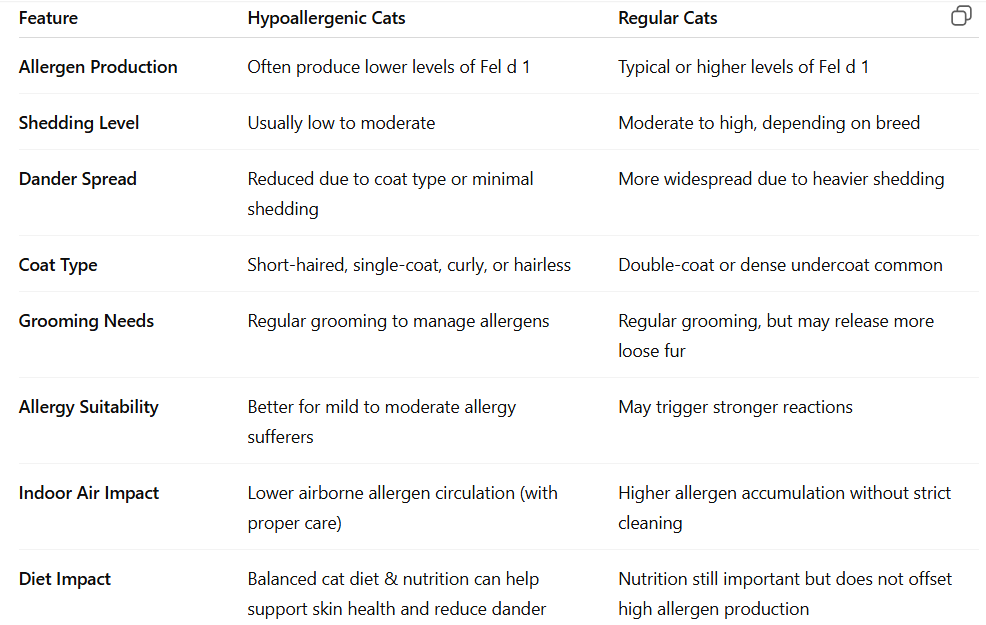
It’s important to remember that “hypoallergenic” does not mean allergy-free. Individual reactions vary, and environmental management plays a major role in comfort levels.
Regardless of breed type, consistent cleaning, grooming, and proper care determine how manageable allergies will be in everyday life.
Things to Consider Before Buying a Hypoallergenic Cat
Bringing home a hypoallergenic cat can feel like the perfect solution if you struggle with allergies — but it’s important to think beyond the label. While certain breeds may produce fewer allergens, ownership still requires commitment, realistic expectations, and proper planning.
1. No Breed Is Completely Allergy-Free
Even low-allergen breeds still produce Fel d 1 protein. Your reaction depends on your personal sensitivity level, not just the breed. Whenever possible, spend time with the specific cat before adopting. A short visit can help you understand how your body responds.
2. Individual Cats Vary
Allergen levels differ from cat to cat — even within the same breed. Gender, age, and whether the cat is neutered can affect allergen production. Never rely solely on breed reputation; evaluate the individual animal.
3. Grooming & Maintenance Commitment
Low-shedding or hairless cats often require structured grooming routines. Some need frequent brushing, while others (like hairless breeds) need weekly bathing. If you’re not prepared for regular maintenance, allergen levels can quickly build up indoors.
4. Cleaning & Home Adjustments
Owning a hypoallergenic cat still means committing to regular vacuuming, washing bedding, and possibly investing in HEPA air purifiers. You may also need to create pet-free zones, especially in bedrooms, to control exposure.
5. Lifestyle Compatibility
Temperament matters just as much as allergen levels. Some low-allergen breeds are highly energetic and demand constant interaction, while others are calm and independent. Consider your work schedule, home size, and daily routine before choosing a breed.
6. Long-Term Financial Responsibility
Beyond adoption costs, factor in food, veterinary care, grooming tools, litter, toys, and emergency medical expenses. Hairless or specialty breeds may also require additional skin care or temperature management.
7. Ethical Breeding & Adoption Options
Research breeders carefully and avoid impulse purchases. Reputable breeders provide health screenings and transparency. Alternatively, some shelters and rescues may have low-shedding or allergy-friendly cats available for adoption.
A hypoallergenic cat can be a wonderful companion, but success depends on preparation and realistic expectations.
Instead of searching for a “perfect” allergy-proof pet, focus on finding the right balance between breed traits, home management, and your personal sensitivity. With thoughtful planning, cat ownership can be both comfortable and rewarding.
Things to Consider Before Buying a Hypoallergenic Cat
Bringing home a hypoallergenic cat is an exciting decision — especially if you’ve struggled with allergies in the past. However, choosing the right cat requires more than just selecting a breed labeled “low-allergen.” Individual reactions vary, and factors like grooming commitment, home environment, and long-term care responsibilities all play important roles.
Before making a decision, spend time interacting with the specific cat you’re considering. Even within the same breed, allergen production can differ from one cat to another. It’s also wise to think about your lifestyle. Do you have time for regular grooming? Can you maintain consistent cleaning routines? Are you financially prepared for veterinary expenses?
Planning ahead reduces surprises and increases the likelihood of a healthy, manageable experience for both you and your future pet.
Consulting a Veterinary clinic Before Adoption
Before adopting, schedule a visit to a Veterinary clinic for professional advice. A veterinarian can help assess whether a hypoallergenic breed is suitable for your allergy level and overall lifestyle.
If you have a history of moderate or severe allergic reactions, consider discussing allergy testing with both your doctor and a Veterinary clinic professional.
Spending time with the cat before final adoption is also important. Some Veterinary clinic facilities or reputable breeders may allow controlled exposure visits so you can monitor your symptoms.
A veterinarian can explain realistic expectations, coat care needs, dietary support, and potential health risks associated with certain breeds. Getting expert guidance from a Veterinary clinic ensures that your decision is informed, responsible, and safe for both you and the cat.
Professional advice reduces guesswork and helps you prepare properly.
Importance of cat Preventive Care
Ongoing cat Preventive Care is essential for maintaining both your pet’s health and managing allergens effectively. Preventive care includes routine vaccinations, parasite control (such as flea and tick prevention), and regular health checkups.
Healthy skin and coat condition directly affect dander levels. Skin infections, parasites, or poor health can increase shedding and irritation, which may worsen allergen spread.
A consistent cat Preventive Care schedule helps detect problems early and keeps your cat’s immune system strong.
Regular vet visits also ensure proper dental health, weight management, and dietary adjustments. When combined with grooming and cleaning routines, cat Preventive Care supports overall wellness while indirectly helping control allergen production in the home.
Healthy cats typically produce fewer complications — and fewer allergy-triggering issues.
Adoption vs Breeder
Choosing between adoption and buying from a breeder requires thoughtful consideration. Adoption centers may have mixed-breed cats with lower allergen traits, and adopting gives a cat a second chance at a home.
Reputable breeders, on the other hand, can provide health screening records, genetic history, and transparency about allergen tendencies. If choosing a breeder, ensure they conduct proper health tests and follow ethical breeding practices.
Regardless of your choice, prioritize health documentation, transparency, and responsible sourcing over appearance alone.
Frequently Asked Questions
1. Are hypoallergenic cats completely safe for allergy sufferers?
No cat is 100% allergy-free. Hypoallergenic breeds typically produce lower levels of the Fel d 1 protein or shed less, which may reduce symptoms. However, individual reactions vary. Spending time with the specific cat before adoption is the best way to test compatibility.
2. Which hypoallergenic cat breed sheds the least?
Hairless breeds like the Sphynx do not shed fur, while short-haired breeds such as the Russian Blue and Cornish Rex shed very little. Keep in mind that less shedding does not mean zero allergens, since proteins are still present in saliva and skin.
3. Can diet really reduce cat allergens?
A balanced diet supports healthy skin and reduces excessive dander. While proper nutrition won’t eliminate allergens, it can improve coat condition and minimize skin flaking. Some specialty foods may also help neutralize active allergens found in saliva.
4. How often should I groom a hypoallergenic cat?
Most low-shedding cats benefit from brushing two to three times per week to remove loose hair and dander. Hairless breeds require weekly bathing to control oil buildup. Consistent grooming helps reduce allergen spread inside the home.
5. Does cat Preventive Care help with allergies?
Yes. Regular cat Preventive Care — including vaccinations, parasite control, and routine checkups — keeps your cat’s skin and coat healthy. Skin infections or fleas can increase irritation and dander, which may worsen allergy symptoms. Healthy cats are easier to manage in allergy-sensitive homes.


Comments
Post a Comment